PT | EN |
MENU
FILTERS
MENU
PT | EN
SOBRE SATÉLITE
LISTA DE PARTICIPANTES
Pedro Azevedo
C

Pedro Azevedo is a researcher and programmer in cinema and visual arts. He is currently a PhD candidate in arts at UFC and holds a master’s degree in art studies from the University of Porto. His work focuses on curatorship, museology, and film criticism. He was curator at Cinema do Dragão (2013–2022) and Head of Collection and Research at the Museum of Image and Sound of Ceará (2022–2023). He also teaches courses and workshops in both public and private institutions.
Azevedo is the artistic director of colo.zone, a platform that creates a space of exchange between curatorial and critical thinking, featuring Brazilian and international artists alongside essays, interviews, and courses. Since 2024, he has served as the Director of Programming for the Janela Internacional de Cinema do Recife.

He currently collaborates with Pivô Arte e Pesquisa in the area of audiovisual curatorship and contributes to the culture section of the newspaper O Povo, where he writes about national and international film festivals. A member of Abraccine (Brazilian Association of Film Critics), he was part of its board from 2019 to 2022, during which he coordinated the Sessão Abraccine project. He is a contributing author of Documentário brasileiro: 100 filmes essenciais, Cinema fantástico brasileiro: 100 filmes essenciais, and other titles from the same series. He has also curated exhibitions such as À Nordeste – Cinema de Reinvenção (Sesc 24 de Maio, São Paulo) and Passeio Noturno (MIS, Fortaleza), and was part of the curatorial team of the Brasília Festival of Brazilian Cinema.

http://leticiaramos.com.br/

Letícia Ramos explores the production limits of the experimental analogue image through works in photography and film. Her practice points to the aesthetic intersections between science and fiction transiting between natural and imaginary landscapes.

She has won photography awards such as Besphoto / NovoBanco, Brasil Fotografía Award, Bolsa Zuum / Moreira Salles Institute, Marc Ferrez Award and the Beca de Creación de la Fundación Botin. Her works were exhibited in spaces such as Tate Modern, Pivô Art Center, Moreira Salles Institute, Itaú Cultural, Fundación Iberê Camargo, Berardo Collection Museum, CAPC Musée d’art contemporain (Bordeaux). Her works are in collections such as Fundacion Botin, Noveo Musee de Monaco, Museum of Modern Art SP – RJ and Pinacoteca do Estado de São Paulo.


Participated in the exhibition Between Our Knots: Ten Years of ZUM/IMS Grant in 2023

Works with video, performance, and artificial nails. Their work explores the boundaries of identity, nature, and culture, examining their multiple productions and inefficacies. In 2018, they received the National Visual Arts Award of Uruguay. They are a certified PADI Diver and currently live between Buenos Aires and Mexico City. Since 2018, they have been collaborating with Florencia Rodriguez Giles on a project that delves into the imaginative power of the underwater world.

Participated in Pivô Satélite 2023.

This project is a realization of the Secretaria Municipal de Cultura de São Paulo and Pivô Arte e Pesquisa, through the Programa Municipal de Apoio a Projetos Culturais PROMAC, established by Law n°15.948/2013.

Florencia Rodriguez Giles explores the relationship between contemporary artistic practices and therapeutic procedures through means that include drawing, video, performance, and research into experimental pedagogical practices. Since 2018, she has had a project with Emilio Bianchic that explores the imaginative power of the underwater world. She holds a degree from the Escuela Nacional de Bellas Artes Prilidiano Pueyrredon and is a certified PADI diver. In 2006, she continued her training with Nicola Costantino. The following year, she attended the Diana Aisenberg art clinic, and between 2010 and 2011, she participated in the Kuitca Scholarship / Torcuato Di Tella University.

Her work has been supported by numerous grants, including from the National Endowment for the Arts, the Fundación Antorchas of the Ministry of Culture of the Argentine Nation, and the Centre National des Arts Plastiques (CNAP) in France. In 2016, she received the first Braque Muntref Prize, and in 2019, the first Federico Klemm Prize. She has also participated in residencies at Palm Heights Hotel (Cayman Islands, 2022); Le Magasin- Centre National d’Art Contemporain (Grenoble, France, 2017); Frac Lorraine (Metz, France, 2016); Cité Internationale des Arts (Paris, France, 2016-2017); Paradise Air (Japan, 2015); Arcus Studio Residency for Artists (Japan, 2014); and AIT- Arts Initiative Tokyo (Tokyo, Japan, 2009).

Among her individual performances and exhibitions, the following stand out: Symtomario (Museo de Arte Moderno de Buenos Aires, 2022), Ronco Oceânico (Performance Biennial, 2019), Biodelica (Galería Ruth Benzacar, 2018); EsquizoPicnic (Museo Reina Sofía, Spain, 2018); Liminoid Session (Palais de Tokyo, France, 2016); Strabisme Internet (Galerie Bendana-Pinel, 2016); Hiperestesia (Muntref, 2016).

The therapeutic possibilities of artistic practice are part of her research fields. In this context, her work at the Clube de Artes e Lazer (La Plata, 2021-), GAYA (La Plata, 2019), INHA (Paris, 2019), EHPAD, Solexine, (G.E.M.) (Grenoble, 2017-18), the palliative care service for adults at the Legouest Hospital (Metz, 2016), the Luis Agote Juvenile Institute (Bs. As, 2014), and the Ricardo Gutierrez Children’s Hospital, Palliative Care Area (2010-2016) is worth highlighting.

She participated in Pivô Satélite 2023.

This project is a realization of the Secretaria Municipal de Cultura de São Paulo and Pivô Arte e Pesquisa, through the Programa Municipal de Apoio a Projetos Culturais PROMAC, established by Law n°15.948/2013.

Gabriel Junqueira (Fortaleza, Ceará, 1992) is a multimedia artist who explores the relationships between body, technology and materiality in supports such as digital images, sculptures and installations.

His recent research revolves around the relationship between built spaces and nature through the creation of landscapes in 3D architectural visualization software, commonly used in the real estate market to simulate structures to be built. Seeking inspiration from corporate architecture and landscaping concepts, the artist creates impossible locations, where figurative elements are rearranged to abstraction.

As an extension of his research in visual arts, since 2018 he has been dedicated to the musical project “Naves Cilíndricas”. In 2020, he released two albums: “Imagens de Desastres Em Alta Resolution” by the Meia Vida label and “Névoa” by the Domina label.

@gabrieljunq

@navescilindricas

Artist participating in Pivô Satellite #4  (2022)

UV Estudios
C

In 2015 UV Estudios, from the depths of performances and wigs, emerged as a residence/gallery/project of participatory work and exhibition in a house in the city of Buenos Aires. Its challenging and inspiring spirit allowed it to explore art in collaboration, holding over 70 exhibitions, performances, parties, international fairs, and intense collaborations with other projects in Latin America and the Caribbean. In 2020, UV transformed itself, ending UV Gallery and becoming a project office. Today, it is a space for research, dialogue, and collaboration with artists, curators, managers, galleries, institutions, friends, and other exhibitions worldwide. In December 2022, it opened its new space in Santa Fé.

UV Estudios was the curator of Pivô Satellite 2023.


Arte Pará
C

Arte Pará reached, in 2022, its 40th edition and arose from the project idealized by the journalist Romulo Maiorana (1922-1986), at the beginning of the 1980s, to create a space to support Para artists and a dialogue between the North region and the country. At a time in history when the Amazon was not generating expectations on a global scale, Maiorana awakened the public’s sensibility through the social function of art, from space for meeting and encouraging artists.
Arte Pará was born with the vocation of establishing the presence of the Amazon on the map of the arts as a salon. Throughout its uninterrupted editions, it has become a national art and education project and a place for intellectual exchange between artists, curators, and cultural agents, as well as a space for reflection and criticism, which legitimises young emerging artists. For over 20 years, Paulo Herkenhoff, one of the country’s most relevant art critics and thinkers, has been leading Arte Pará as the event’s general curator.
With a professional trajectory that articulates institutional work and innovative research, Paulo was assistant curator in the painting and sculpture department at the Museum of Modern Art in New York, MoMA (1999-2002), general curator of the São Paulo Biennial and curator of the Brazilian Pavilion at the 47th Venice Biennial. He was a consultant for the IX Kassel Documenta in Germany (1991). For him, Arte Pará has “an important role in the socialization of art, developed through the educational process, much more than the art market”.
The educational project of Arte Pará is one of the most comprehensive in the national context and offers a parameter of the relationship between a complex of communication and the social insertion of art.


Vânia Leal
C

Master’s degree in Communication, Language, and Culture. Educational Curator of the Arte Pará Project since 2007 until the present moment. Works in the field of curating and research in the arts, having participated in selection and award juries and salon organizations.

Evaluator for the Rumos Itaú Cultural selection in 2015 and 2016. Evaluator for the Rumos Itaú Cultural selection in 2017/2017. Nominator Curator for the Pipa Prize in 2017. Curator of the Exhibition “Mastarel: Imaginal Routes” by artist Elaine Arruda at Banco da Amazônia in 2019 – Belém, PA. Curator of the Exhibition “Fabrics of Certainty” by artist Elisa Arruda at Galeria Elf in 2019 – Belém, PA. Selection Committee for the 24th Anápolino Art Salon in 2019. Selection Committee for the Rumos Itaú Cultural Call for Projects in 2019/2020. Curator of the Exhibition “At Home” by artist Elisa Arruda at Banco da Amazônia in 2021 – Belém, PA. Organizer of the Guajará Collection for the Museum of Plastic Arts in Anápolis, GO in 2021. Curator of the Exhibition of the Eduardo Vasconcelos Collection at Theodoro Braga and Benedicto Nunes Galleries in Centur, Belém, PA in 2021. Jury member of the Residencies Program at Instituto Inclusartiz – RJ in 2022. Jury Committee of the 32nd Exhibition Program at CCSP – São Paulo Cultural Center in 2022. Curator of the Exhibition of the Eduardo Vasconcelos Collection – “Desnudo” – 2022. Associate Curator of the Arte Pará Project in 2022. Curator of the Exhibition “The Inversion of Everyday Life” by artist Elisa Arruda at Galeria Ruy Meira in Belém, Pará, 2022. Curator of the Exhibition “Engraved in the Soul” from the Eduardo Vasconcelos Collection at Banco da Amazônia in Belém, Pará, 2023. Curator of the first Amazon Biennial in 2022 and 2023. Lives and works in Belém.

Violeta Mansilla
C

Violeta Mansilla (Santa Fe, Argentina 1987) works as a curator, producer, hostess, manager, teaching performer and lawyer. Since 2015, she works as the director of UV a project of residencies, research and exhibition, from 2015 to 2020 operated in a house in the neighborhood of Villa Crespo, Buenos Aires where more than 60 solo exhibitions, group exhibitions, perfuchs, presentations, workshops and parties were held. Since 2022 it opened its doors in a new house in the historic center of the city of Santa Fe. She has worked with galleries, institutions and projects throughout Argentina, as well as in Latin America, Europe and the United States. Some of her curatorial work includes “MD” at ICBC Foundation (Buenos Aires) in 2017; “LCD LSD LED”, at Museo Arte Contemporáneo (Montevideo) in 2018; “Sub-versions” at KM Gallery (Puerto Rico) in 2019, “Camp Fires” at Last Tango, Shedhalle and Tanzhaus in (Zurich) in 2021, “Greenhouse Club” at Toxi Space (Zurich). His work has been reviewed in ARTFORUM, ARTnews, The art Newspaper, Terremoto among others. From 2020 to 2022 she worked as Curator of the Residency Program of the Ama Amoedo Foundation in Uruguay. Violeta lives and works between Buenos Aires and Santa Fe.

Violeta was curator of Pivô Satélite 2023.

Mónica Heller (b. 1975, Buenos Aires) is a cartoonist, painter and video artist. Throughout her career she has created 2D and 3D animations, using both amateur production strategies and CGI models taken from open-source and free libraries. The self-taught nature of her approach to digital technology and the artisanal dedication she puts into each of her pieces laid the foundations for a DIY work ethic that characterizes and singles out both her varied production and the place she occupies within the
Argentine art scene.

Her works have been exhibited individually and collectively around the world. Among the several awards she received in recent years, the following stand out: the First Prize of the Andreani Award (2017), the Stimulus Award of the 72nd Salón Nacional Castagnino + Macro Museum (2017) and the Third Prize of the Fortabat Award (2021). She has represented the Argentina at the 59th International Art Exhibition of La Biennale di Venezia in 2022.


Participated in Pivô Satélite 2023

Visual artist and Master in Arts from the Universidade Federal do Pará. She is currently a doctoral student in Arts at UFPA. She works with various media, including videos, drawings, and neon installations, with the word and autofiction as her aesthetic guide, using words as a poetic medium, expanding and crossing meanings. As an artist, she has participated in exhibitions and projects in Brazil and abroad, such as: Eu, mesmo sem farol, segui, Espaço Cultural Silveira Athias, Belém, 2023; Matéria Difusa, um olhar sobre a coleção MACRS, Rio Grande do Sul, 2022; Prêmio Diário Contemporâneo de Fotografia, 2021; Praia, Galeria da Gávea, Rio de Janeiro, 2019; Triangular arte deste Século, Casa da Cultura da América Latina, Universidade de Brasília, Brasília, 2019; Prêmio Diário Contemporâneo de Fotografia, Museu do Estado do Pará, 2019; Salão Arte Pará 2019, Deslendário Amazônico, Museu do Estado do Pará, 2019; Experiência Vertigem, Museu da UFPA, Belém, 2019; Outra Margem Outro Um, Casa das Artes, Belém, 2018; O Designo e a Matéria (Sesc Juazeiro do Norte, Alagoas, and Fortaleza) – 2018; Salão Arte Pará – 2017; Prêmio Diário Contemporâneo de Fotografia – 2017, 2014, and 2011; O Designo e a Matéria (Sesc Palmas and São Paulo) – 2017; No Limite/Am Limit, Museu da UFPA – 2017; Extremos, Galeria Guaçuí, Juiz de Fora – 2017; Amazonian Video Art, The Centre for Contemporary Arts, Glasgow, Scotland – 2016; Para ver se o tempo volta, Galeria Fauna, São Paulo, 2015; Alastramento, Ateliê 397, São Paulo, 2015; Meu Coração (Teu) Território, project awarded the FUNARTE Visual Arts Grant 2014 – 2015, among others.

Among Awards, Grants, and Residencies, highlights include: Research and Creation Grant from the Fundação Cultural do Pará (2018), Honorable Mention at the 35th Salão Arte Pará 2016, Funarte Visual Arts Production Stimulus Grant – 2014; Artistic Residency at the Centro Cultural São Paulo, held at the Instituto Hilda Hilst and Atelier Aberto in Campinas – SP – 2014; Research, Creation, and Experimentation Grant – Instituto de Artes do Pará – 2014; Mídias Locativas Vivo Art Mov Eco Região Amazônica Award – 2012; Acquisition Award at the Salão Pequenos Formatos Unama – PA – 2012; Acquisition Award at Salão Arte Pará – 2011; Research, Creation, and Experimentation Grant – Instituto de Artes do Pará – 2011; Art Research Grant from the Fundação Ipiranga – 2009; Artistic Residency Grant – IAP + Kunsthaus; Germany- 2006. Mapped by the RUMOS ITAÚ CULTURAL project – 2005/2006. She also works as an independent curator, currently serving as the associate curator of the Amazonian Art Collection at UFPA; associate curator of Arte Pará 2019 (Exhibition Deslendário Amazônico); Presence in Collections: Casa da Cultura da América Latina, Museu de Arte do Rio Grande do Sul, Sesc Nacional, Amazonian Art Collection, Museu Casa das Onze Janelas, and Fundo Z.

She participated in Pivô Satélite 2023.

This project is a realization of the Secretaria Municipal de Cultura de São Paulo and Pivô Arte e Pesquisa, through the Programa Municipal de Apoio a Projetos Culturais PROMAC, established by Law n°15.948/2013.

Works with video, performance, and artificial nails. Their work explores the boundaries of identity, nature, and culture, examining their multiple productions and inefficacies. In 2018, they received the National Visual Arts Award of Uruguay. They are a certified PADI Diver and currently live between Buenos Aires and Mexico City. Since 2018, they have been collaborating with Florencia Rodriguez Giles on a project that delves into the imaginative power of the underwater world.

Participated in Pivô Satélite 2023.

This project is a realization of the Secretaria Municipal de Cultura de São Paulo and Pivô Arte e Pesquisa, through the Programa Municipal de Apoio a Projetos Culturais PROMAC, established by Law n°15.948/2013.

Florencia Rodriguez Giles explores the relationship between contemporary artistic practices and therapeutic procedures through means that include drawing, video, performance, and research into experimental pedagogical practices. Since 2018, she has had a project with Emilio Bianchic that explores the imaginative power of the underwater world. She holds a degree from the Escuela Nacional de Bellas Artes Prilidiano Pueyrredon and is a certified PADI diver. In 2006, she continued her training with Nicola Costantino. The following year, she attended the Diana Aisenberg art clinic, and between 2010 and 2011, she participated in the Kuitca Scholarship / Torcuato Di Tella University.

Her work has been supported by numerous grants, including from the National Endowment for the Arts, the Fundación Antorchas of the Ministry of Culture of the Argentine Nation, and the Centre National des Arts Plastiques (CNAP) in France. In 2016, she received the first Braque Muntref Prize, and in 2019, the first Federico Klemm Prize. She has also participated in residencies at Palm Heights Hotel (Cayman Islands, 2022); Le Magasin- Centre National d’Art Contemporain (Grenoble, France, 2017); Frac Lorraine (Metz, France, 2016); Cité Internationale des Arts (Paris, France, 2016-2017); Paradise Air (Japan, 2015); Arcus Studio Residency for Artists (Japan, 2014); and AIT- Arts Initiative Tokyo (Tokyo, Japan, 2009).

Among her individual performances and exhibitions, the following stand out: Symtomario (Museo de Arte Moderno de Buenos Aires, 2022), Ronco Oceânico (Performance Biennial, 2019), Biodelica (Galería Ruth Benzacar, 2018); EsquizoPicnic (Museo Reina Sofía, Spain, 2018); Liminoid Session (Palais de Tokyo, France, 2016); Strabisme Internet (Galerie Bendana-Pinel, 2016); Hiperestesia (Muntref, 2016).

The therapeutic possibilities of artistic practice are part of her research fields. In this context, her work at the Clube de Artes e Lazer (La Plata, 2021-), GAYA (La Plata, 2019), INHA (Paris, 2019), EHPAD, Solexine, (G.E.M.) (Grenoble, 2017-18), the palliative care service for adults at the Legouest Hospital (Metz, 2016), the Luis Agote Juvenile Institute (Bs. As, 2014), and the Ricardo Gutierrez Children’s Hospital, Palliative Care Area (2010-2016) is worth highlighting.

She participated in Pivô Satélite 2023.

This project is a realization of the Secretaria Municipal de Cultura de São Paulo and Pivô Arte e Pesquisa, through the Programa Municipal de Apoio a Projetos Culturais PROMAC, established by Law n°15.948/2013.

Anthropologist with a degree from the Universidade de São Paulo (USP) and the Universidade Federal do Pará (UFPA), working as a professor and researcher at the intersection of urban anthropology and gender and sexuality studies. He entered the field of Visual Arts in 2019, independently, with a photo-performance titled “Movimento-Ação”, performed on the Island of Cotijuba (PA).

In 2020, he began his creative process for the production of “Corpo (in)finito?”, an audiovisual essay that seeks to compose narratives about life and death in the urban landscape of the city of Belém. In the same year, he presented a video-oriented performance with the same name at the Pequeno Encontro da Fotografia (online edition). Also in 2020, his first authored poem (Cotidiano) was published in a Poetry Anthology in the Concurso Nacional Sarau Brasil. In 2022, he was selected in the category Fomento à Produção de Artistas Emergentes da Amazônia Legal to be part of the 40th Salão Arte Pará. Still in 2022, he independently released the short film “Corpo (in)finito?”. His works are permeated by the relationship between textual and bodily language as a way of reflecting on the body, gender, sexuality, territory, urban space, memory, and ancestry.

He participated in Pivô Satélite 2023.

This project is a realization of the Secretaria Municipal de Cultura de São Paulo and Pivô Arte e Pesquisa, through the Programa Municipal de Apoio a Projetos Culturais PROMAC, established by Law No. 15.948/2013.

Bisagra
C
Bisagra is an art collective which aims to function as an articulation point in the fragmented world of the visual arts in Lima and Latin America, creating the conditions for art production while, at the same time, encouraging connections between art theory, pedagogy and activism. The project opened its doors to the public in 2014 as an independent and grassroot art space, privileging the creation of critical content around contemporary art through a varied public program constituted by workshops, symposia, residencies, publications, performances and exhibitions. Throughout its initial years, Bisagra’s program has always been context responsive, fostering alternative communities to contest the dominant homophobia, patriarchy and racism that, until today, shape the status quo in Lima. Currently the collective works as a nonprofit organization in which collaboration and hospitality are core values. Indeed, in alliance with different partners in crime we have focused in developing heterogeneous artistic platforms which respond and enact the epistemological, ethical and political horizons we wish would exist in Lima, Peru and beyond. Bisagra’s most recent endeavor is the “Programa de destinos y presagios compartidos” an experimental educational program directed to Peruvian artists and cultural agents. The collective is currently formed by the curators Miguel A. López, Florencia Portocarrero and the artists Eliana Otta, Iosu Aramburu, Andrés Pereira Paz and Juan Diego Tobalina.   Guest curators of edition #4 of Pivô Satélite (2022) .

Esteban Igartua (Lima, Peru, 1974) makes paintings and drawings depicting landscapes and scenes that highlight the organic aspect of human life. The boundary between the human being and the surrounding environment is blurred and, in some cases, indistinguishable.

He studied painting at the Pontificia Universidad Católica del Peru, then at the Slade School of Arts and Byam Shaw, London. In 2003 his work was selected for Bloomberg New Contemporaries, which took place in Manchester and London that year.

His latest solo exhibitions include: ‘Coliflor’, Proyecto Amil, Lima (2018), ‘Excursión’, Garúa, Lima (2015) and ‘Campo Ocupado’, Revolver Galeria, Lima (2012). His work has been part of group exhibitions in Peru, the UK, Brazil, Spain, Albania, and Colombia. It has been referenced in publications such as “77 Contemporary Peruvian Artists” (2017), edited by Mario Testino Museum – MATE and New Contemporaries (2003). In 2019, Proyecto Amil published “Coliflor”, bringing together the works that were part of the exhibition of the same name and texts by contemporary Peruvian writers. He currently lives and works in Bristol, UK.


Genietta Varsi (Lima, Peru, 1991) investigates from a sculptural point of view how matter (bodies) shape and transform the environment with their behavior and vice versa. Varsi works with multidisciplinary methodologies and tools combining art, medicine, biochemistry, ecology, mechanics, and anthropology to think and unthink the body in the everyday. The media she works with include sculpture, drawing, video, sound, actions, workshops, and printed publications.

She is pursuing a Master’s degree in Visual Culture, Contemporary Art and Curatorship at Aalto University, Finland. She studied sculpture at the PUCP in Peru. He has participated in the artistic residencies Uberbau_House and Residencia Artística FAAP in São Paulo, Brazil, in Molten Capital at the Museo de Arte Contemporáneo-Quinta Normal in Santiago de Chile. She had received the Artus grant for Delfina Foundation in London, England. His latest solo exhibitions include: “Pumping Roots”, Galeria 35m2, Prague “Pneumatic Driving” Ginsberg, Lima, 2021, “El dedo pulgar es el que ejecuta”, Ginsberg, Lima, 2018. Varsi has presented his projects in group exhibitions and film festivals in Europe and South America.

Participating artists of Pivô Satellite #5

Gianfranco Piazzini Alcántara (Lima, Peru,1984) studied at the Art Faculty of the Pontificia Universidad Católica del Perú. He currently works with different media, mainly video, animation, drawing, and sound. 

His work addresses the representation of emptiness, the blurring of boundaries, and the abstraction that remains when the limits of language, culture, and reason expand. He explores identity through the limits of the body, the transplantation of concepts, and the mutability of definitions, which are conditioned by time and memory.


Diego Vizcarra Soberón (Lima, Peru, 1981) is an animation filmmaker, he studied at the Film School in Lima, Peru, and at the Escuela de Trazos in Madrid, Spain. He departs from surrealism, psychedelia, and poetry to inquire, in a critical spirit, concerns, reflections, dreams, or visions that question our contemporary condition. The artist is interested in the status of the image or the relationship – both personal and social – with the natural environment. 

His works have been shown at festivals in Peru, Cuba, Mexico, Puerto Rico, Brazil, Argentina, and Spain.

Participating artists of Pivô Satellite #5 

Sylvia Fernández (Lima, 1978) studied Fine Arts at the Escola Superior de Arte Corriente Alterna, she has participated in several group and solo exhibitions in Lima and abroad. Among these, the solo exhibition ‘Volvamos’ curated by Nicolás Gómez Echeverri (Galería del Paseo, 2021), ‘Negar el desierto’ (Museo de Arte Contemporáneo MAC Lima, 2020), ‘Vamos Desapareciendo’ (Salón ACME, 2020) and ‘Conversaciones con Carmen’, exhibition curated by Jorge Villacorta (ICPNA Miraflores, 2019). She has participated in different competitions, being a semi-finalist in the BP Portrait Award (London, 2017) and finalist in the Fundación Focus Abengoa (Spain, 2005), ‘Pasaporte para un Artista’ (Lima, 2004), among others. In addition, she has participated in art fairs such as Arco (Spain) and Cologne Art Fair (Germany).


Rodrigo Andreolli (Rayo Wasser) (1984, São Paulo) transits through the arts, exercising the body as an element of sensitive activation of the visible and invisible layers of public matter. He works in the elaboration of production structures for multidisciplinary art projects.

Associated with the company Teatro Oficina Uzyna Uzona (2006, São Paulo), he was a resident artist and producer of the Residency for dance LOTE (2011-2014, São Paulo) and structural artist of the research project Terreyro Coreográfico (2014-2017, São Paulo), he was also part of the Residency Helmet in Athens (2017), Master in Choreography and Performance at the Institute for Applied Theatre Studies (ATW), JLU, Gießen, Germany (2018-2022), Research Affiliate in the ACT, Arts, Culture and Technology Program at MIT – Massachusetts Institute of Technology (2020), and Danceweb Scholarship Program 2015 – Vienna Dance Festival Impulstanz.

Some of the most recent works are “Matter Mythologies” (2019, Athens, Greece), supported by Creative Europe Mobility Funds – IPortunus; “Zu Verschenken” (2021, Giessen/ Frankfurt, Germany); “Vibrations of the Ignoto” (2022, Rio de Janeiro, Brazil), performance and installation in mixed reality, part of the Museums Conference, commissioned by the Goethe-Institut Rio de Janeiro, in partnership with the National Museum and Rio Art Museum.


Participating artists of Pivô Satellite #5

Rita Ponce de León is a visual artist with a focus on drawing and installation. She is currently studying the system of psycho-corporal techniques for human development proposed by the Argentine organization Rio Abierto. In her work, she engages in situations focused on learning and participation, leading to the generation of ephemeral human encounters. She approaches practices such as butoh and various workshops that approach body movement as the origin of knowledge and wisdom. This diversity of processes is condensed through drawings which she shares in visual essays. Her work has been exhibited at the 32nd São Paulo Biennale (Brazil), Kunsthalle Basel (Switzerland), Galeria 80M2 (Peru), Museu de Arte Moderna (Mexico), among others. In addition, her images have been published in Vitamin D2: new perspectives in drawing (2013). Currently, she collaborates with Yaxkin Melchy (poet), Shinnosuke Niiro, Emilie Sugai, Joelle Gruenberg.  Participating artist of Pivô Satellite #5 
aarea
C

www.aarea.co is a curatorial platform founded in 2017 that commissions and exhibits artworks designed especially for the internet. aarea’s activities also extend into a public curatorial program, courses, seminars, and projects in partnership with other art institutions. Founded by Livia Benedetti and Marcela Vieira, aarea is the first internet native art institution in Brazil and has been developing projects in institutional partnerships, such as Bienal de São Paulo, Jeu de Paume (Paris), CCA Wattis Institute (San Francisco), Pivô, Sesc, Pro Helvetia (Switzerland), Salón Nacional de Bogotá (Colombia), among others. aarea has held courses, lectures, and educational activities in places such as the University of São Paulo, Université Rennes II (France), Federal University of Amazonas, Sesc, and the British School of Creative Arts.

Guest curators Pivô Research 2020 Cycle I and edition #4 of Pivô Satélite (2022) .

Gabriel Massan (Nilópolis, Rio de Janeiro, 1996) is a mixed format digital artist. Combining storytelling and world-building techniques, he discusses the relations of power and inequality in life performances inside the virtual space. His work includes 3D animation, digital painting, single-player games, virtual and augmented reality, and has been widely distributed in NFT. https://gabrielmassan.com Artist participating in the 4th edition of Pivô Satellite (2022)
Júlia Rocha collaborates with dance, writing and performance processes. In 2014 she started É selo de língua, through which she experiments with textual and sound editions, with Gustavo Galo. She graduated in Communication of the Body Arts, PUC-SP and is currently taking her master's degree in Visual Poetics at ECA-USP. Artist of Pivô Research 2020 Cycle I and Satellite Pivô #4 edition (2022)

Pedro Victor Brandão (Rio de Janeiro, RJ, 1985) works with photography, painting, moving image and social experimentation. He confronts the artistic traditions in assessments of the present and future of capitalism. His research combines different fields of knowledge, such as economics, the right to the city, cybernetics and the current manipulable nature of the technical image. Victor Brandão studied photography at Estácio de Sá University in Rio de Janeiro and attended free courses at Escola de Artes Visuais Parque Lage and the Summer University at Capacete. He held the solo shows “Pintura antifurto”, in Casa França-Brasil (Rio de Janeiro, Brazil), “Tela Preparada”, in Sé gallery (São Paulo, Brazil), and “Forjada e Outras Formas” in Portas Vilaseca Gallery (Rio de Janeiro, Brazil), among others. He has participated in group shows such as “Vivemos na melhor cidade da América do Sul”, in Iberê Camargo Foundation (Porto Alegre, Brazil), “Take Me, I’m Yours”, in Villa Medici (Rome, Italy), and “O Rio é uma Serpente”, in SESC (Sorocaba, Brazil).

https://pedrovictor.com.br 

Artist participated in Pivô Pesquisa 2018 and in Pivô Satélite #4. (2022)

Gabriel Junqueira (Fortaleza, Ceará, 1992) is a multimedia artist who explores the relationships between body, technology and materiality in supports such as digital images, sculptures and installations.

His recent research revolves around the relationship between built spaces and nature through the creation of landscapes in 3D architectural visualization software, commonly used in the real estate market to simulate structures to be built. Seeking inspiration from corporate architecture and landscaping concepts, the artist creates impossible locations, where figurative elements are rearranged to abstraction.

As an extension of his research in visual arts, since 2018 he has been dedicated to the musical project “Naves Cilíndricas”. In 2020, he released two albums: “Imagens de Desastres Em Alta Resolution” by the Meia Vida label and “Névoa” by the Domina label.

@gabrieljunq

@navescilindricas

Artist participating in Pivô Satellite #4  (2022)

Raphael Fonseca
C

Raphael Fonseca is a researcher at the intersection of curating, art history, criticism and education. He is currently preparing the exhibition “Sweat”, opening this year 2021, at Haus der Kunst (Munich, Germany), co-curated by Anna Schneider. He is a curator, along with Renée Akitelek Mboya, of the 22nd edition of the Bienal_Sesc_Videobrasil, in 2023. He worked as a curator of the Contemporary Art Museum of Niterói (MAC Niterói) between 2017 and 2020. He holds a doctoral degree in Art Criticism and Art History at UERJ (State University of Rio de Janeiro). Among his exhibitions, highlight to “Vaivém” (CCBB SP, DF, RJ and MG, 2019-2020); “Lost and found” (ICA Singapore, 2019); “Bestiário” (CCSP, 2017); “Deslize <surfing skate>” (Museu de Arte do Rio, 2014) and “Água mole, pedra dura” (1st Bienal do Barro de Caruaru, 2014).


www.raphaelfonseca.net


Invited curator Pivô Satellite #3

The Instagram profile @newmemeseum was created in late July 2020. One of the main motivations was the desire to reflect, with humor and irony, about the mechanisms adopted to survive in/on the art world, and also about the mechanisms that the art world imposes on us - at first sight, opaque and incomprehensible. Often, the memes created are about personal experiences. The @newmemeseum performed the virtual occupation Combater ficção com ficção in the project ofício:webat at Sesc Pompeia, São Paulo, which was on view from July to August 2021. Soon, it will inaugurate the occupation part of Pivô Satelitte's third edition, entitled Sex, Lies and Videotape, curated by Raphael Fonseca.   Participating of Pivô Satellite #3
Daughter of the mysterious entrails of mother Bahia, from where arteries of living waters sustain in faith, abound. Ventura Profana (Salvador, 1993) prophesizes multiplication and abundant black, indigenous and transvestite life. She breaks the haze: erotic, atomic, taking red as religion. Her doctrine comes from Baptist temples, she is a missionary pastor, evangelist singer, writer, composer, and visual artist, whose practice is rooted in researching the implications and methodologies of deuteronomism in Brazil and abroad, through the spread of neopentecostal churches. The oil of daisies, jiboias and reginas run down the paths until it floods her with desire: anointing. It praises, like the nailing of a dagger licked with cerol and rust in Pharisaic hearts.
Visual artist, PhD in Visual Arts at PPGAV/EBA/UFRJ. In his artistic and theoretical research, he investigates the influence of documentations, narratives and other forms of "self-documentation" in the way people live and how they are socially recognized. He participates in exhibitions and other art activities since 2009, among the main ones are the 5ª Edição do Prêmio Energias na Arte, at the Tomie Ohtake Institute / SP; Artists' Films and Videos, at the Iberê Camargo Foundation / RS; Abre Alas 10, at the gallery A Gentil Carioca / RJ; and 65 Salão de Abril, at Centro Cultural Banco do Nordeste / CE, in which his video "Fundos" was awarded. In 2019, he presented the solo exhibition "Como faremos para desaparecer", curated by Charlene Cabral, at the Fundação ECARTA gallery, in Porto Alegre / RS. In 2020 he was one of the artists nominated for the PIPA Prize. cargocollective.com/eduardomontelli   Participating artist Pivô Satellite #3
Laura Fraiz (São Paulo, 1996) is a Brazilian and Venezuelan artist who works with video, performance, drawing, painting, sound and writing. In her production, she creates confessional and autobiographical narratives, exposing memories, secrets and daydreams to investigate relationships such as reality and fiction, violence and desire, control and disobedience. Graduated in Visual Arts at the University of Brasilia, she exhibited her work in several cities in Brazil, as well as in Switzerland and Singapore. In 2018, she was awarded the Transborda Brasília Award, with the videos Mordente (2017) and Inside My Baby (2006).   Participanting artist Pivô Satellite #3
Victor Gorgulho
C

Victor Gorgulho (Rio de Janeiro, 1991) is a curator, journalist and researcher based in Rio de Janeiro. Graduated in Journalism from ECO-UFRJ. He holds a master’s degree in Literature and Contemporary Culture from PUC-Rio.

Curated the exhibitions We live in the best city of South America, along with curator Bernardo José de Souza (Átomos, Rio de Janeiro, 2016 and Iberê Camargo Foundation, Porto Alegre, 2017); The third world asks for a blessing and goes to sleep (Despina, Rio de Janeiro, 2017); I’ve always dreamed of a museum in fire – Laura Lima & Luiz Roque at Carlos Werneck’s Puppet Theater (Rio de Janeiro, 2018); Perdona que no te crea (Fortes D’Aloia & Gabriel, Rio de Janeiro, 2019).

Co-curator, with Keyna Eleison, of the exhibition Engraved in the body, at Carpintaria, Rio de Janeiro, on view until February 2021.

Since 2019 he is the curator of MIRA, ArtRio’s videoart program. He is part of the curatorial body of Despina, a research center and artistic residency space in Rio de Janeiro, under the direction of Consuelo Bassanesi. At the space’s cineclub, has promoted the screening of films and conversations with artists such as Cristiano Lenhardt, DISTRUKTUR and Karim Aïnouz.

As a journalist, he worked as assistant editor of culture for Jornal do Brasil (2014-2017) and today collaborates with vehicles such as El País Brasil. Co-organizer, along with critic and curator Luisa Duarte, of the book No tremor do mundo – Essays and interviews in the light of the pandemic (Editora Cobogó, 2020).


Guest curator Pivô Satélite 2021 #2

Davi Pontes (São Gonçalo, 1990)

Artist, choreographer and researcher. Graduated in Arts at Universidade Federal Fluminense and Master’s student in the Postgraduate Program in Arts (Contemporary Studies of the Arts) at the same institution. He studied at the ESMAE Superior School of Music and Arts (Porto, Portugal).

Since 2016 he has presented his work in art galleries and national and international festivals, mainly at the University of Pennsylvania (USA), Pivô (São Paulo), Centro Cultural de Belém (Lisbon), Rua das Gaivotas 6 (Porto), Galeria Vermelho (São Paulo), Valongo International Image Festival (São Paulo), Rumos Itaú Cultural 2021 Program, Panorama Festival (Rio de Janeiro), Artfizz – HOA Galeria (USA) and resident in the Pivô Arte Pesquisa Program, in the Research Residency Program in arts at MAM Rio and at the Escola Livre de Artes – ELÃ, among others. He directed the film Rave the Racial in partnership with the artist Wallace Ferreira, a work commissioned by the Pivô Satellite Program, 2021.

Developing a research that starts in the body, his practice carries the constant challenge of positioning choreography to respond to its own ontoepistemological conditions -, to serve politically in the face of the conditions in which it is being practiced. The artist has dedicated his practice to deepen the concepts of raciality, choreography and self-defense and their entanglements based on the idea of archive contained in the production of History.


Wallace Ferreira (Rio de Janeiro, 1993)

Dance artist, performer, visual artist born and raised in Vigário Geral, a suburb of Rio de Janeiro. His first artistic reference arises in childhood with his family, where everyone dances and builds their relationships through affection and movement. With the encouragement of his father, he began his studies in dance as a child. Projecting futures previously dreamed. He studies Dance at Universidade Federal do Rio de Janeiro (UFRJ), building strategies and choreographing actions to escape representations. Through undisciplinary practices, his creations cause accidents in the languages ​​of dance, theater, performance and the visual arts, investing in the perception of himself as a possible path of muscular dreams. Through other perspectives, new visions of the self. His work is also an obsession with entering layers of the invisible, inhabiting fragilities, accumulating movements that wish to blur certainties and dispute narratives. To betray words and produce images to touch with your eyes. Driven by the challenges of tensioning the present, since 2017 he has been presenting his works in art galleries, national and international festivals such as Pivô Satellite, Festival Panorama, ArtRio, Presença Exhibition, HOA ART, Artfizz. Among his most recent works, highlight to the trilogy “Repertório” in partnership with the artist Davi Pontes who was at the VERBO Exhibition at Galeria Vermelho, Valongo International Image Festival in São Paulo, Segunda Preta, Belo Horizonte, Anita Schwartz art gallery, Rio de Janeiro.

Participating artists of Pivô Satellite #2

Born in Belém, 1992. lives and works between Rio de Janeiro and São Paulo, graduated in Visual Arts from the Federal University of Pará (UFPA). Rafael Bqueer's performance practices come from investigations on political art, sexuality, Afrofuturism and decoloniality. Drag queen and LGBTQI + activist, Bqueer has a work that also dialogues with video and photography, using satires from the pop universe to build attentive criticisms of contemporary issues. Bqueer acts in a transdisciplinary way with experiences between fashion, samba schools and contemporary art. Bqueer has participated in national and international exhibitions, highlighting: “Against, Again: Art Under Attack in Brazil"- Shiva Gallery em Nova York (2020) e a individual “UóHol” no Museu de Arte do Rio (2020). Artista premiade na 8º Edição da Bolsa de fotografia da Revista ZUM - Instituto Moreira Salles (2020) e 7º edição do Prêmio FOCO Art Rio (2019). Selecionade para a 30ª edição do Programa de Exposições Centro Cultural São Paulo- CCSP (2020); participou da residência Artística AnnexB em Nova York (2019). Foi indicade ao Prêmio Marcantônio Vilaça (2019) e Prêmio EDP nas Artes do Instituto Tomie Ohtake (2018). Suas obras fazem parte dos acervos do Museu de Arte do Rio (MAR), Museu de Arte Moderna do Rio de Janeiro (MAM) e Museu do Estado do Pará (MEP).   Participating artist of Pivô Satellite #2 Participated in the Aparamento project, a partnership between Pivô and Yes I Am Jeans for SP–Arte, curated by Alexandre dos Anjos and Pivô Participated in the exhibition Between Our Knots: Ten Years of ZUM/IMS Grant in 2023

Diambe da Silva was born and raised on the outskirts of Rio de Janeiro. Her artistic production moves between cinema, sculpture and choreography and often deals with materialities like cement, food, engraving, photography and words that are elaborated to the extent that she creates companions in situations of diaspora. Her work was exhibited in Museu de Arte do Rio (Casa Carioca), Paço Imperial (Esqueleto, uma história do Rio), Galpão Bela Maré (Transcendências), Escola de Artes Visuais do Parque Lage (Arte Naïf; Estopim e Segredo), Carpintaria – Fortes D’Aloia e Gabriel (Escrito no corpo), Despina (Cartões de revisita) and 25º Salão de Artes de Anápolis. She also participated in the residences MAM / Capacete (2020), Despina (2019), Estado  crítico (2018) and in the itinerary program Residência Cem Teto (2019-2020).


http://cargocollective.com/diambe

https://vimeo.com/387099169

Instagram: @diambe_eu_vc


Participating in Pivô Satellite #2

Anarca Filmes is a collective proposition in cinema and contemporary art working since 2014. Its films, videos, parties and artistic residencies are manifested as relational devices, which exercise the coexistence of difference. The group create interlocutions between presences and spaces, expanding its supports and temporalities through dialogue with the languages ​​of performance, installation, video and internet. Influenced by political tensions in Brazil from 2013 onwards, the collective members began their activities at night scene in Rio de Janeiro and Recife, documenting and promoting politically engaged movements, in addition to parties at spaces aimed at producing social impact - always in dialogue with a network of artists, activists, filmmakers, therapists, cultural producers, researchers and educators from all over Brazil. Anarca Filmes’ works have already been shown at festivals and institutions in the Netherlands, Portugal, Germany, Mexico and several states in Brazil. Currently the group have copies available online and in the collection of the Cinematheque of the Museum of Modern Art in Rio de Janeiro. Participating in the Pivô Satellite are Amanda Seraphico, Clarissa Ribeiro and Lorran Dias.   Watch here.   Clarissa Ribeiro Film director, editor and visual artist, Clarissa Ribeiro has a degree in audiovisual from the School of Communication at the Federal University of Rio de Janeiro. In 2013, she directed and edited her first short film: "CHOQUE", receiving the award for "Best Contribution to Cinematographic Language" at the International Archive Film Festival (REcine 2013). In 2015 she was co-creator of the collective Anarca Filmes, an independent and experimental audiovisual production group, where she works until today as a director, editor, actress and director of photography. Her second film: "X-MANAS" (2017) was exhibited in more than 20 national and international film festivals and exhibitions, such as Olhar Internacional de Cinema and Berlin Porn Film Festival. At the end of 2019, she finished her third film "A Carne é Beijo e o Avesso Água", selected for the 7th RECIFEST - Festival of Sexual Diversity and Gender. In 2018 she co-created the “ANTI Antifascist Film Residency Project” at the Independent Art Space SARACVRA, where for one month, she coordinated the production and finalization of 8 films. Highlights: "Noite Escura de São Nunca" (2015), winner of the Best Short Award by the Critics Jury at the 19th Tiradentes Cinema Exhibition, where she worked as an actress and director of photography; "Perpétuo" (2018), by Lorran Dias, selected for the 48th International Film Festival Rotterdam, where she worked as an editor; and "Uma Paciência Selvagem me Trouxe Até Aqui" (2021), directed by Érica Sarmet, where she worked as an actress and editor. She currently concentrates her artistic research in the area of ​​noise music, having released her first EP "A Serpente das Escamas de Cristal" in June 2020. In addition, Clarissa also acts as a producer and DJ at Isoporzinho das Sapatão, an event focused on the occupation of public spaces by lesbian and bisexual women.   Lorran Dias Lorran Dias is a filmmaker, artist, curator and screenwriter residing in Favela da Maré, Rio de Janeiro. He is artistic director and content programmer at TV Coragem (Programa Convida, IMS, 2020), directed and edited the documentary Novo Rio (2020), directed and scripted Perpétuo (International Film Festival Rotterdam 2019), among other titles and film residencies with Anarca Filmes. He graduated in Cinema and TV at the UFRJ School of Social Communication with the work "Disputas Sensíveis: Ensaio-Manifesto contra o Olhar Colonial". He interned at the production company Taiga Filmes (2015) and since then he has worked in the audiovisual industry with assistance from directors, script and script doctoring. Since 2017 he participates in the curatorship of the Semana de Cinema festival / Semana dos Realizadores, being the curator of Cinerama Cineclube and its annual exhibitions of contemporary Brazilian cinema (2014-2017). The installation Transmission: When Ficcion Becomes History (C + CSJS of UBC's Research Excellence Cluster) is available on the Ehcho.org platform. His latest works were made possible by the Instituto Moreira Salles, Critical + Creative Social Justice Studies of the University of British Columbia (Canada), Heinrich Boll Stiftung (Germany/Rio), Observatório de Favelas (Rio) and recognized by The Documentary Impact Producer Relief Fund of Doc Society (London/New York).   Amanda Seraphico Amanda Seraphico "Badgaleto", graduated in Audiovisual at the School of Communication at UFRJ and graduated in the Executive Production course at the International Film Academy. She is also one of the founders of Anarca Filmes, in which she reveals herself as a screenwriter, director, producer, performer and editor of videos and films such as "Badgaleto - No Limite da Morte" and "O Conto do Nunca Mais", shown at ArtRio 2019. She directed and acted in "A Lenda do Galeto Vegano", made in partnership with visual artist Sosha. Currently, she has also explored the language of graphic design by creating posters.   Anarca Filmes is a participant of Pivô Satellite #2.
Diane Lima
C

Diane Lima is an independent curator, critic and researcher. She has an MD in Communication and Semiotics at PUC-SP, her work consists of experimenting with contemporary curatorial practices from a decolonial perspective. She is currently part of the curatorial team of the 3rd edition of Frestas – Trienal de Artes at SESC-SP and since 2018 she has been curating the Valongo Festival. Among her main projects, the idealization of the AfroTranscendence art-education program stands out; the curatorship between 2016 and 2017 of Itaú Cultural Diálogos Ausentes exhibition program and the participation in 2018 in the CCSP Art Critics Group. In 2019 she was co-curator of the PlusAfroT Residence and the group exhibition Lost Body – displacement as choreography, both projects that took place in Munich-Germany. Sworn in by several selections and award commissions, she is a professor at Itaú Cultural’s Specialization in Cultural Management and editorially co-curates two contemporary art publications, one by Act. and the other by French publisher Brook, both in press.


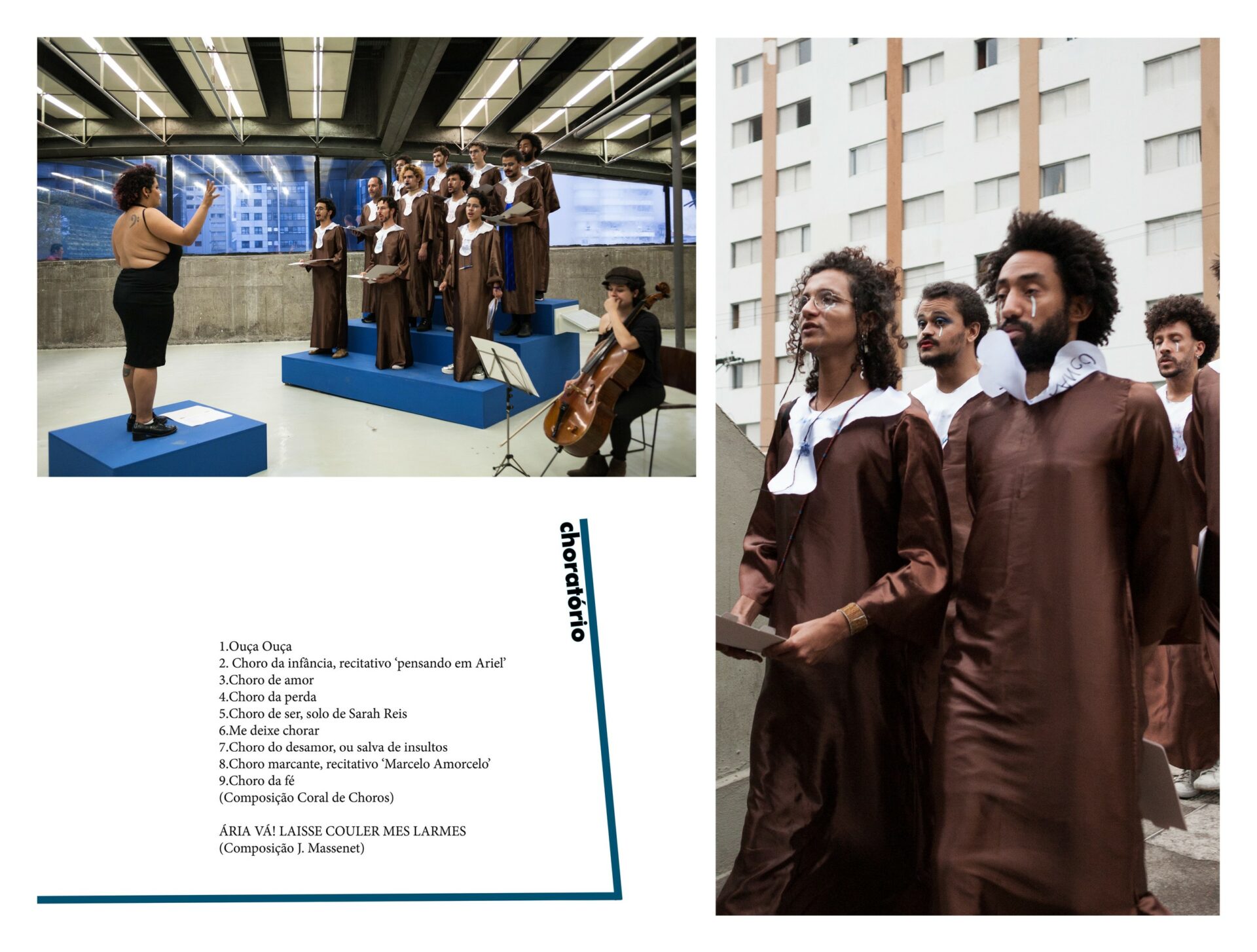
Ana Raylander Mártis dos Anjos is born in the world’s end, currently lives in São Paulo. In her artistic practice, she seeks to establish a dialogue between collective history and her own history, which she has called a practice in chorality, involving groups of people for collaborations and experiences of collision. With a background in clowning, a BA in Visual Arts from the Federal University of Minas Gerais (Brazil) and Art and Multimedia from Escola Superior Gallaecia (Portugal), she understands her performance as an interdisciplinary and transversal activity. She has frequently resorted to the knowledge of education, writing, performance and play as a way of composing verbal, corporal and ethical machinery to discuss her urgencies in long-term projects. She was awarded a residency at the Adelina Institute (2019) and the EDP in the Arts Residency Award, from the Tomie Ohtake Institute (2018), performed the Choros Choros project, in the CCSP Exhibition Program (2018), participated in exhibitions at Aura Gallery, Centro Cultural UFMG, XIX Bienal Internacional de Cerveira e Novas Poéticas. She held solo shows in Brazil and Spain.


Participating artist at Pivô Satellite #1.

Diego Araúja is from Salvador-BA, Brazil, and produces art in an expanded way. His media are literary, visual, scenic and cinematographic. He acts as director, playwright, screenwriter and visual artist. Since 2013 he directs the process Estética Para um Não-Tempo (Aesthetics for a Non-Time), with the objective of establishing a qualitative time that allows the production of emancipated afro-diasporic memories; what he calls Fundamentos Futuros (Future Foundations). In this process, he experimented with the creation of oríkì’s (oral literature of Yorùbá origin), which generated the work QUASEILHAS (2018). In 2017 he founded the ÀRÀKÁ Platform with artist Laís Machado. In 2018, he designed a choreographic performance for the video installation A Marvelous Entanglement, by British artist Isaac Julien. In the same year, he did his artistic residency at Atlantic Center For The Arts (Florida-USA), where he created the video installation Oríkì das Araújas, experimenting with synthetic sound vibrations in oríkì’s. In 2020, he did his artistic residency at SAVVY Contemporary (Berlin-GER). Currently, Araúja is developing authorial cinematographic work, while organizing the foundation of the International Creole Laboratory.


Participating artist at Pivô Satellite #1.

biarritzzz (Fortaleza, 1994) lives and works in Recife, Brazil. New media interdisciplinary artist whose focus is to understand the interactions between the internet universe, the image world and the non-hegemonic bodies, investigating the infinite languages from this intersection and their cryptographies as tools of power. In her work, she remixes pop culture, video art, meme politics, video game aesthetics and poetry with new media, her natural habitat. One of the first exponent Brazilian artists in GIF art, biarritzzz extrapolates her childhood and nerdy experiences in this world of epileptic images in motion, usurping digital aesthetics and putting into play the false question of technicity versus amateurism/science versus magic in the creation of realities.

www.biarritzzz.com 


Participating artist of Pivô Satellite # 1

The artist participated in the video program of the show ‘from underwater mountains fire makes islands’, curated by Yina Jiménez Suriel, in 2022.

Rebeca Carapiá was born in lower city, Salvador-Bahia. Visual artist graduated by the Federal University of Bahia, she is interested in the relations produced between language, conflict, body and territory. Based on her experience and daily life in the neighborhood of Uruguai, a space that constitutes her as an artist, she has been creating and organizing a set of practices and reflections through different platforms of exhibition, formation and artistic experimentation, visible and invisible to the contemporary art circuit. Through sculptures, drawings, installations, prints, texts and objects, the artist creates a cosmology around the conflicts of the norms of language and the body, in addition to expanding a geopolitical debate involving memory, precarious economies, ancestral technologies, sexual dissent and of gender and the power relations between speech and word. Performing the deconstruction of women’s geographies, she uses experience with metalwork and materials such as copper and iron to confront the hegemonic discourses of art and politics.


Participating artist at Pivô Satellite 2020 #1

BIOGRAFIA
Ana Raylander Mártis dos Anjos

Ana Raylander Mártis dos Anjos is born in the world’s end, currently lives in São Paulo. In her artistic practice, she seeks to establish a dialogue between collective history and her own history, which she has called a practice in chorality, involving groups of people for collaborations and experiences of collision. With a background in clowning, a BA in Visual Arts from the Federal University of Minas Gerais (Brazil) and Art and Multimedia from Escola Superior Gallaecia (Portugal), she understands her performance as an interdisciplinary and transversal activity. She has frequently resorted to the knowledge of education, writing, performance and play as a way of composing verbal, corporal and ethical machinery to discuss her urgencies in long-term projects. She was awarded a residency at the Adelina Institute (2019) and the EDP in the Arts Residency Award, from the Tomie Ohtake Institute (2018), performed the Choros Choros project, in the CCSP Exhibition Program (2018), participated in exhibitions at Aura Gallery, Centro Cultural UFMG, XIX Bienal Internacional de Cerveira e Novas Poéticas. She held solo shows in Brazil and Spain.


Participating artist at Pivô Satellite #1.

Ana Raylander Mártis dos Anjos
The sayings and non-sayings of laughter
26 OCT - 26 NOV, 2020

“The sayings and non-sayings of laughter” is the theme of the 1st edition of Seminários Engraçados, a work by Raylander Mártis dos Anjos that proposes a set of free conferences on laughter in the Brazilian and international context. In the work that weaves satire with the basis of her research on choralities, Mártis investigates the themes that involve laughter, play and humor on historical, aesthetic and political levels.

Pulling nervous laughs out of us, the seminar also brings play itself out into the open and leads us to think that the masks we wear make us hide our smiles. Thus, as we say our goodbyes to Satélite, the artist fables with the festivities and revelers, turning the somersault into an episteme to escape the moral imperative of destruction.

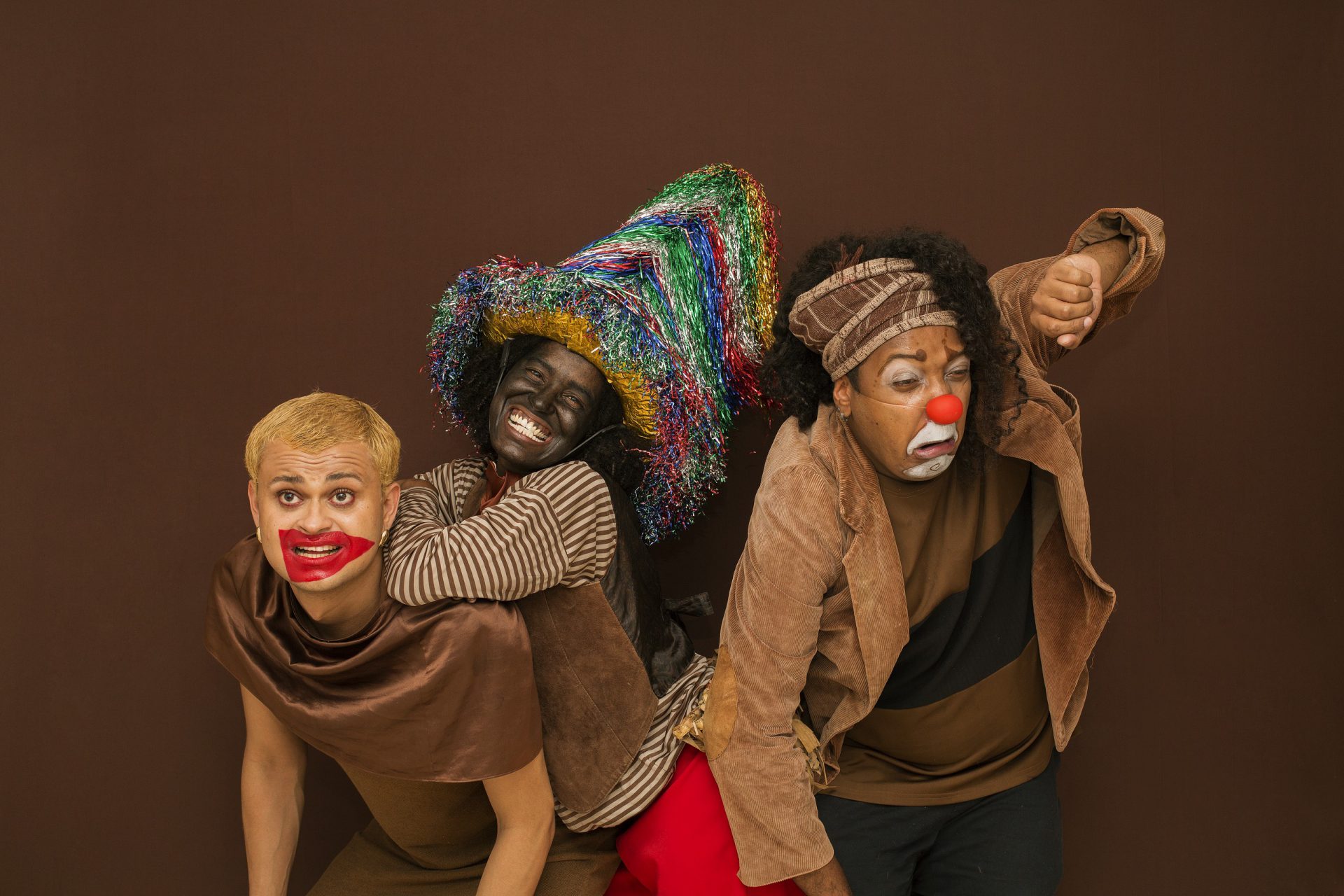
The seminar will be mediated by Raylander Mártis dos Anjos and clown Fiapo Marrom.

A artista e pesquisadora Raylander Mártis dos Anjos e a palhaça Fiapo Marrom, em parceria com o espaço Pivô Arte e Pesquisa, celebram a 1ª edição dos Seminários Engraçados. O projeto tem como tema Os ditos e os não ditos do riso, e propõe um conjunto de conferências e ações gratuitas sobre o riso no contexto brasileiro e internacional.

Seminários Engraçados considera pensar o riso como um campo de disputa e de imaginação política. O que está em jogo quando reivindica-se ou abdica-se do direito de rir? Essa edição considera também investigar para qual lugar o riso pode nos levar coletivamente, por isso foi urgente investigar as resistências que se fazem no campo dos festejos e das comemorações.

Uma revolução também acontece na brincadeira e na diversão. É preciso ampliar as maneiras de lutar uma guerra, e rir junto é uma delas. Quais portais se abrem em um ajuntamento coletivo, como no Cavalo Carinho, Festas Juninas e Congados Mineiros, patrimônios imateriais do povo e espaços ancestrais do encontro?

O riso está em constante disputa. Seja no campo da história da arte, que possui uma pedagogia das imagens e da representação do riso; seja na tradição popular e religiosa, na qual a resistência se faz no empenho coletivo para os encontros; seja no campo moral e ético, que estabelecem os postulados, os campos de negociações e tensões de uma sociedade.

É urgente lembrar que ser alvo de uma risada pode abrir uma ferida purulenta e potencialmente incurável no corpo. Esse é o caso relatado por crianças que se comportam de modo não normativo e são vítimas de piadas por colegas e professores do ensino regular. O riso, portanto, em muitos contextos pode ser usado como uma ferramenta bélica, e é urgente compreender a sua letalidade.

Sendo o riso também essa arma letal, como interpretá-lo em um contexto forjado pelas políticas de morte contra os povos negros, as comunidades transvestigêneres e pessoas de classes não favorecidas economicamente? Falamos aqui sobre um território assombrado pelo mito da democracia racial; assombrado pelo travesticídio; e assombrado pelos inúmeros processos de sujeição que reatualizam a mecânica colonial de mundo. Em ambos os casos existem corpos a serem nomeados, responsabilizados e entendidos como a raiz desse projeto grotesco.

Por último, é importante comentar sobre a urgência de realizar no contexto da 1ª edição do projeto ações inscritas numa produção de saberes do corpo. Para além de encontros que visam investigar o riso através dos livros e dos arquivos, busca-se também anunciar a produção de pensamento através das grafias do corpo em movimento e na vocalidade, como discute a pensadora Leda Maria Martins.

Os corpos, juntos, são o espaço de produção de pensamento. Seja por meio de um encontro histórico entre os festejos populares brasileiros; seja por meio de cenas curtas de palhaços; seja por meio do circo, que invade a instituição; seja por meio de uma apresentação oral. Seminários Engraçados defende que o riso é uma expressão que precisa ser vivida em sua integralidade, para assim compreendermos sua potência revolucionária.

No país e no mundo das assimetrias, quem brinca de rir entra pra guerra.

Que abram as porteiras para o riso, salve-se quem puder!

Serviço:

Seminários Engraçados é um conjunto de proposições a longo prazo, e conta com a coordenação e mediação da artista e pesquisadora Raylander Mártis dos Anjos e da palhaça Fiapo Marrom.

Data: em breve!

Mais informações sobre o evento e inscrições: seminariosengracados@pivo.org.br

Programação:


Dia 01 – Segunda-feira

Manhã – O circo reencanta o museu – Cerimônia de abertura da 1ª edição do projeto continuado Seminários Engraçados.

Com a tarefa de inaugurar as atividades e de produzir um retorno ao encantatório no museu, a ação abre passagem para a 1ª edição dos Seminários Engraçados. Reunindo um grupo de circenses brasileiros, para conjuntamente invadir as paredes da instituição e erguer uma tenda de circo, onde tudo pode acontecer.

Tarde – Entradas clownescas e performatividades bobas.

As entradas clownescas são basicamente cenas curtas e dialogadas, interpretadas pelo clown branco e por um ou mais augusto. Elas foram documentadas por Tristan Rémy, em um livro publicado em 1962. As entradas sobreviveram através das gerações pela transmissão oral, cada palhaço construiu a sua maneira única de apresentá-las no picadeiro. A vida dos artistas do circo, pessoas da estrada, se reflete nas entradas clownescas. Para entender essa complexa trama nômade, abordaremos as entradas O restaurante, O barbeiro e O alfaiate. O que escapa dos bastidores e se revela nas entradas?

Noite – Breve panorama sobre a ética e a moral do riso.

Como definiram-se os valores éticos e morais do riso? Quais pressupostos regulam aquilo que é ou não é risível? O autor propõe explorar os conceitos de ética e moral do riso, traçando um panorama histórico que leva em consideração o século X até a contemporaneidade. A comunicação se estabelece em três eixos norteadores: rir com o outro, rir do outro e rir para o outro.


Dia 02 – Terça-feira

Manhã – Cenas de um Brasil cômico e em chamas.

Aproximações entre a concepção de grotesco e o atual cenário brasileiro são a proposta. Pautando as atrocidades institucionalizadas pelas bandas de cá, a comunicação defende que muitas vidas experimentam diariamente uma espécie de cena grotesca, como as cenas pintadas por Hieronymus Bosch. Utilizaremos a equação proposta por Muniz Sodré e Raquel Paiva: Grotesco = Homem # Animal + Riso.

Tarde – Mestiça: um romance brasileiro e o risível no século XX.

A apresentação parte dos estudos sobre o romance Mestiça (1944), de Gilda de Abreu que deu origem à peça de circo-teatro A Mestiça (1951), do Circo Nerino. Pretende-se discutir essas duas fontes artístico-documentais, politicamente alinhadas ao projeto de mestiçagem e de harmonia racial no Brasil do século XX.

Noite – Um flerte entre o nariz vermelho e o riso.

A palhaçaria ocidental, cujas características visuais mais marcantes são o nariz vermelho e a maquiagem no rosto, se espalhou para além do continente europeu, produzindo uma certa “história única” da comicidade no mundo. Esse imaginário, ao mesmo tempo que fabricado, também suprimiu outras formas de cômico tradicionais e ancestrais. Apresentaremos um panorama histórico sobre a palhaçaria ocidental e discutiremos o papel do nariz vermelho no seu processo de globalização. A menor máscara do mundo colonizou o riso nas Américas?


Dia 03 – Quarta-feira

Manhã – E se Cabral usasse calças jeans?

A palhaça Urucum reencena o “descobrimento do Brasil”, interpretando o tirano Pedro Álvares Cabral. Seu personagem usa um par de calças jeans, fabricado no ano de 2020 por uma grife de roupas internacional, que mantém suas costureiras em situação de trabalho amigavelmente forçado.

Tarde – Coral de Risos: discussões em torno de projetos recusados.

Compreender as dinâmicas que balizam as aprovações de projetos artísticos e a consequente recusa de outros. Na oportunidade será utilizado o projeto recusado Coral de Risos como estudo de caso. O projeto consiste num laboratório coletivo, que se desdobra na instalação Espaço do Riso e na apresentação pública da obra Risatório, pensado para e com as imediações de um parque brasileiro. Coral de Risos é a continuidade de uma pesquisa que a artista Raylander Mártis dos Anjos chama de produção de coralidades: reunião e ajuntamento de pessoas que se debruçam durante alguns meses em investigações sobre temas como o choro, o riso, a morte ou a vida. Ela parte dos estudos sobre os arrecifes de corais, onde inúmeros seres dividem um mesmo espaço, um lugar comum.

Noite – O direito ao riso na história da arte: entre a brincadeira, a coralidade e a pirueta no tempo chronos.

Lançando um olhar sobre a representação do riso na história da arte, a presente fala percorre pinturas, desenhos, fotografias e esculturas de artistas nacionais e internacionais que retratam em suas obras essa expressão. Entenderemos na oportunidade o riso como uma potente prática coletiva e seu poder de reconfigurar, em gestos de torção e pirueta, a concepção de tempo cronológico, cuja linearidade e consecutividade são heranças de um mundo ocidental. Quem pode rir e representar o riso na história da arte?


Dia 04 – Quinta-feira

Manhã – Violências por detrás da gargalhada: fobias de raça, gênero e classe no Brasil.

Quais assimetrias são reveladas quando um corpo branco, cisgênero e de classe economicamente dominante utiliza o riso como produção de diferença? Quais correspondências podemos perceber nas violências que atravessam os corpos não privilegiados e a diversão e entretenimento das elites? Como se articulam as fobias de raça, gênero e classe em contexto nacional e quais são as suas aproximações com a risada e a gargalhada?

Tarde – Minha primeira exposição individual: dez dicas de como beijar de língua curadores, galeristas e artistas – um palhaço em cena curtíssima.

A cena curta conta a saga do palhaço Cacareco, que tenta emplacar a sua primeira exposição individual em uma galeria comercial de São Paulo. Cacareco é um palhaço forasteiro e encontra, na cidade grande, muitas aventuras e dificuldades.

Noite – Brincantes não ocidentais e a resistência afro-americana nos cafundós do mundo.

Traçar um olhar cuidadoso sobre as resistências afro-americanas e seus brincantes, como Mateus, Bastião e Catirina do Cavalo Marinho. Discutir as tentativas de apagamento, de demonização desses brincantes e as resistências dessas tradições frente aos processos de dominação do riso. Compreender a cosmovisão filosófica e religiosa através dos aparatos que constituem essas resistências, como cantos, cortejos, festejos, cenários, objetos cerimoniais, adereços, figurinos e danças. Como base para a proposta tem-se um conjunto de entrevistas realizadas em todo o território nacional nos últimos dez anos, vivências nas brincadeiras e o pensamento de Leda Maria Martins que compõe as performances da oralitura e a encruzilhada.


Dia 05 – Sexta-feira

Manhã – O gênero engraçado.

Ao erguer o conceito de gênero engraçado a proposta busca analisar a historicização da travesti como um corpo risível. Desde matérias em jornais, livros e produções audiovisuais das décadas de 1980, 1990 e 2000, será explorado o imaginário construído pela cisgeneridade sobre os corpos das travestis e a ficção de um gênero engraçado, que atrela esse corpo político ao cômico. Na ocasião, a proposta busca também compreender o gênero engraçado como uma possibilidade de afirmação política e de luta.

Tarde – Os ditos e os não ditos do riso.

A presente mesa reúne seminaristas que integram a 1ª edição dos Seminários Engraçados em um diálogo transversal e em formato de roda. Será debatido o grande tema desta edição: Os ditos e os não ditos do riso.

Noite – Encontro nacional dos festejos populares brasileiros – Cerimônia de encerramento da 1ª edição do projeto continuado Seminários Engraçados.

Encerrando as atividades, a cerimônia propõe reunir, pela primeira vez na história, grupos dos festejos populares de todo o território Brasileiro e seus respectivos brincantes. Para esse grande ajuntamento e celebração coletiva, o corpo apresenta-se por meio de voleios, piruetas, rodopios, gingados, dribles, cambalhotas, sussurros, gritos, cantorias, arranjos e improvisos. O corpo inscreve-se nas páginas do mundo e nas temporalidades que se encruzilham.
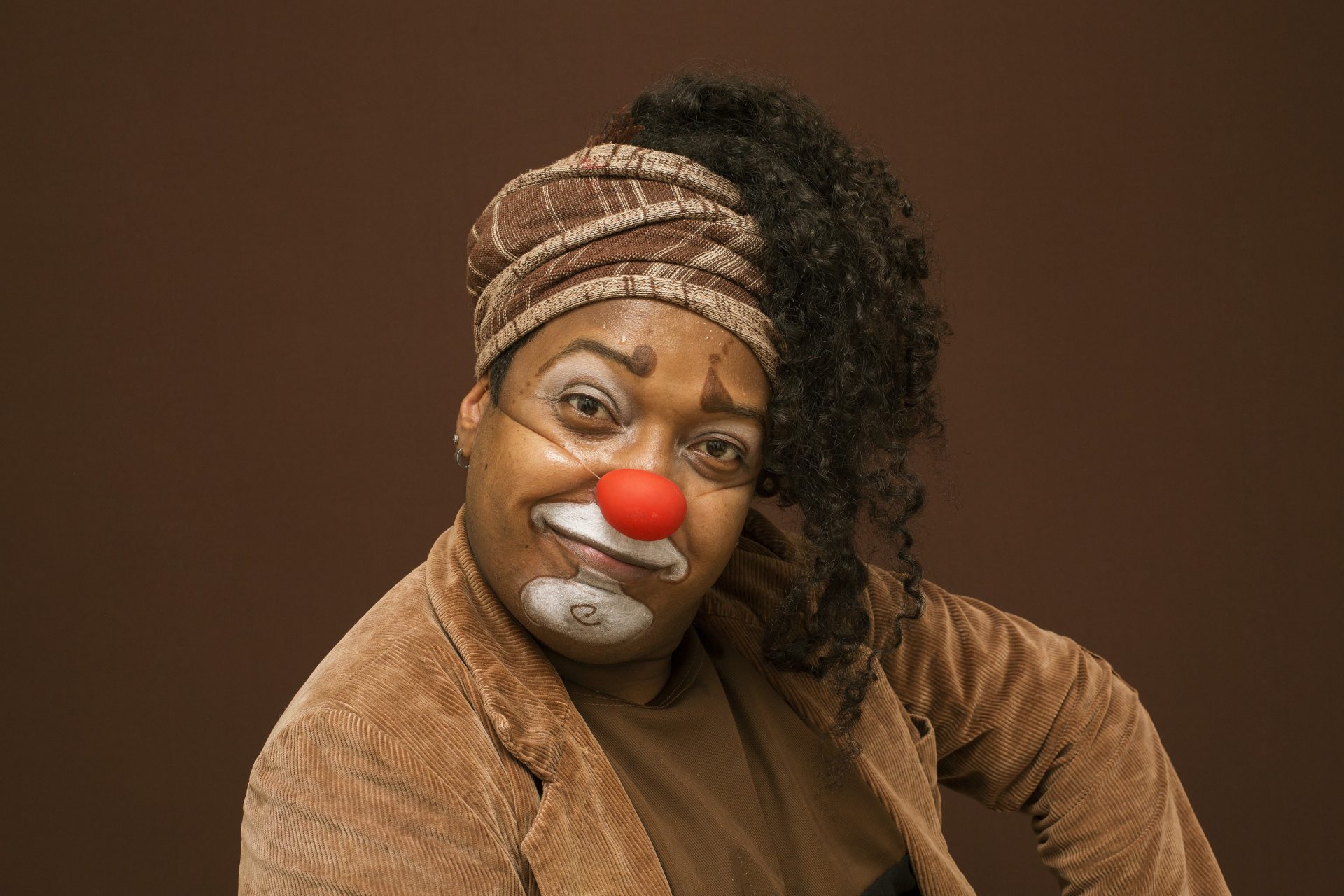
Palestrantes e artistas:

Alex Sandro Duarte, Cibele Mateus, Fiapo Marrom, Flã de Paçoca Lindo, Mateus do Cavalo Marinho, Raylander Mártis dos Anjos, Ruanes Coelho, @ru_anus e muito mais!
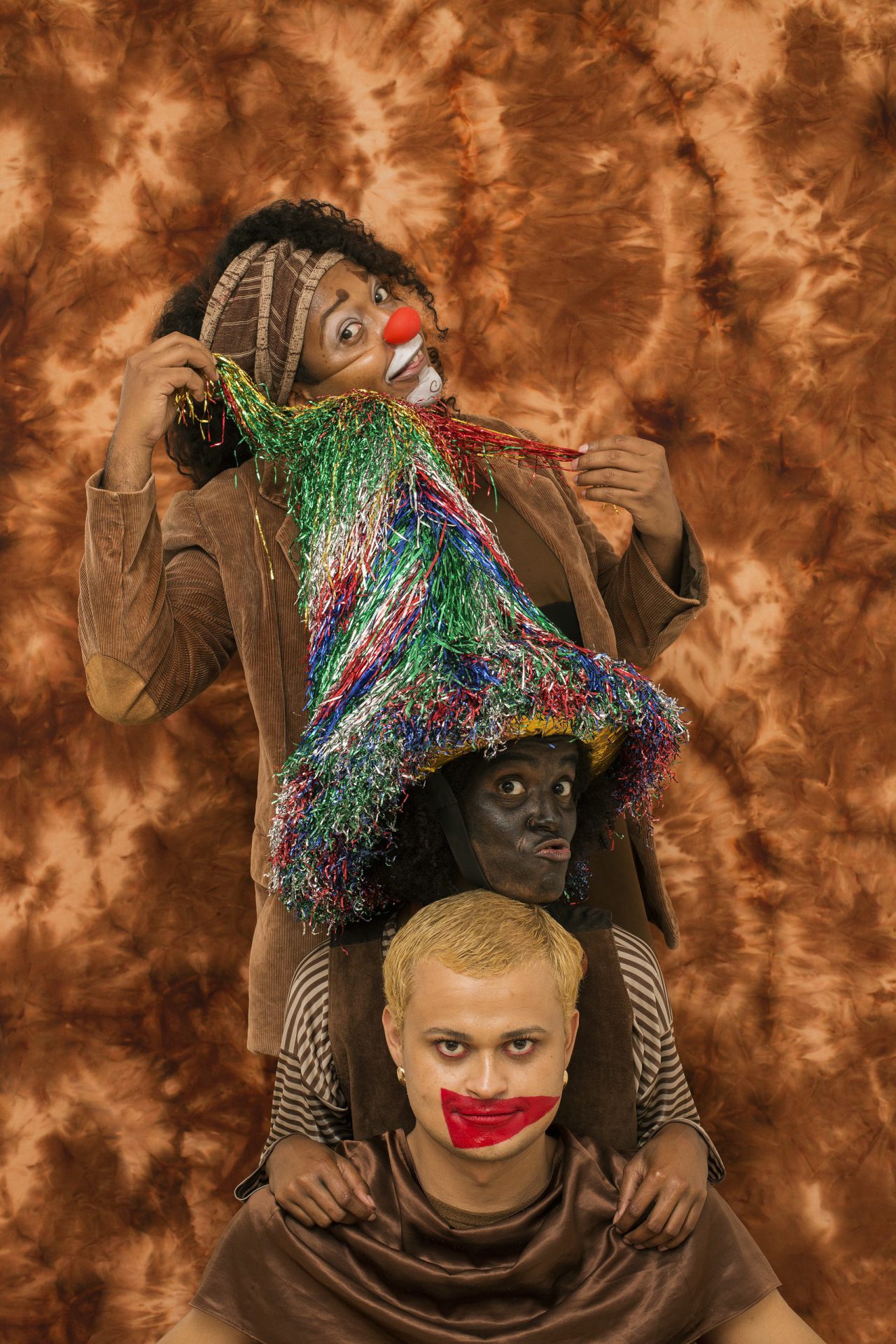
Bios de palestrantes e artistas:


Alex Sandro Duarte, 1983

Ator, artista plástico e músico. Passou por um curso de interpretação de ator no Estúdio Plateia Filmes, na região da Bresser. Trabalhou no meio técnico e tem formação em iluminação voltada para o teatro. Participou da Escola de Artes do Brincante, onde teve experiências na expressão de contextos populares. Fez parte do núcleo de direção teatral do Teatro Vocacional entre 2006 e 2009. Nos meios de produção fez parte do curso de Agentes Culturais. É um dos coordenadores do projeto Encontros de Estudos da Palhaçaria, onde também cuida dos registros artísticos e memória. Em complemento aos estudos das artes faz formação técnica na Etec Carlos de Campos, no curso de Comunicação e estuda música em curso livre da Fábrica de Cultura.


Cibele Mateus, 1985

Brincante, educadora social, atriz e pedagoga. Desenvolve seus trabalhos teatrais com ênfase na pesquisa de expressões tradicionais brasileiras e na arte de rua como poética para a criação cênica, desde 2005. É colaboradora do Grupo Manjarra (SP) desde 2011, onde inicia sua trajetória como Mateus (figura cômica da “cara preta”). Atualmente desenvolve pesquisa e criação cênica na linguagem da comicidade negra referenciada em expressões afrodiaspóricas, em especial o trio cômico (Mateus, Bastião e Catirina) do Cavalo Marinho Pernambucano, tendo como mestre Sebastião Pereira de Lima (Mestre Martelo). Desde 2016 participa de projetos, encontros e festivais de palhaces e circo, apresentando-se em cabarés, ministrando oficina e bate-papos relacionados a comicidade negra, colaborando com diversos espaços e grupos como: Cia. Mundu Rodá, Grupo Manjarra, Terreiros do Riso, Circo do Asfalto e Palhaços Sem Fronteiras.


Fiapo Marrom, dois mil e pouco

Brincante palhaça. De tão sem graça passou a ser engraçada. Só tem duas peças de roupa: um macacão velho de cor marrom, que comprime suas nádegas e coxas; e uma botina marrom de sola arregaçada, que ganhou de uma velha sacana que passava pela estrada. Para ter o seu primeiro nariz vermelho teve que vender outros cem, mas não queriam pagar nem cinco reais por eles. Aprendeu a perder, pra depois ganhar. Hoje anda afastada do nariz vermelho, brigou com ele também. Descobriu a habilidade de rir com o mundo e fazer bobajada, conhecimento herdado de brincantes e palhaças mais velhas. Mente como ninguém, mas tudo que diz é tão verdade que ela parece quase gente.


Flã de Paçoca o Lindo, 2005

Palhaço, músico bonito formado em tocador de campainha. Se descobriu na primeira turma de Formação de Palhaços dos Doutores da Alegria em 2006, participando e atuando no espetáculo Uma Besteira Qualquer. Atuou com o coro A Ópera do Meio do Mundo no SESC Consolação e na Mostra SESC Artes: Mediterrâneo do CEM (Centro Experimental de Música). Fez parte também do Espetáculo no Circo da Barra, na Unesp. Apresentou o espetáculo O Tempo, no Teatro Escola Brincante. Fez parte de um espetáculo de bonecos da cia da Tribo. Apresentou duas vezes no Palhapalooza – Mostra de Palhaços do projeto Encontros de Estudos da Palhaçaria. Participou do Núcleo de Máscara e Circo, da Escola Livre de Teatro (ELT). Organizou saídas periódicas no parque da Água Branca, com grupo de palhaços. E agora, na EEP, dialoga com artistas e grupos variados de São Paulo, propondo cenas em construção, direcionamentos e conversas com outros artistas mestres na linguagem.


Mateus do Cavalo Marinho, não sei se tem 90 ou 10 anos

É preto livre que viveu o tempo do cativeiro. É preto que pinta a cara de preto, de caivão, pra reverenciar os seus antepassados africanos. Pinta sua cara de preto e faz graça pra denunciar e nunca esquecer. Anda solto pelo mundo. Mora onde não mora ninguém. Por onde vai lega seu matulão (mudança) de paia de bananeira, que é tudo o que tem e, “se queimar não dá uma colher de cinza”. Usa um chapéu colorido na cabeça, sua antena, porque a “cabeça não pode ficar descoberta”. Carrega uma bexiga de boi, que serve pra bater e fazer “musga”. Trabalha tomando conta de terreiros. “Toma conta e não dá conta”. É o primeiro a entrar e o último a sair. Gosta de samba quente, e para manter a chama da brincadeira acesa, dá seus gritos de “Riba, pareia!”. É profissional de caretas. Caretas boas de espantar maus espíritos, tão feias que chegam a fazer rir. Escolheu a menina Cibele como cavalo. Montado nela, ele também é ela? Mateus Cibele, Cibele Mateus. Cara melada de encantaria. Cara melada pra empretecer e encantar.


Raylander Mártis dos Anjos, 1995

Raylander Mártis dos Anjos é nascida no cafundó do mundo (MG), atualmente vive em São Paulo. Em sua prática procura estabelecer um diálogo entre a história coletiva e a sua própria história, o que tem chamado de prática em coralidade, envolvendo grupos de pessoas para colaborações e experiências de aquilombamento. Com formação em palhaçaria, bacharelado em Artes Visuais pela Universidade Federal de Minas Gerais (Brasil) e Arte e Multimédia pela Escola Superior Gallaecia (Portugal), entende sua atuação como um fazer interdisciplinar e transversal. Vem recorrendo com frequência aos saberes da educação, escrita, performance e brincadeira como forma de compor um maquinário verbal, corporal e ético para discutir suas urgências em projetos de longa duração. Foi contemplada com uma residência na Adelina Instituto (2019) e com o Prêmio de Residência EDP nas Artes, do Instituto Tomie Ohtake (2018), realizou o projeto Coral de Choros, no Programa de Exposições do CCSP (2018), participou de mostras na Galeria Aura, Centro Cultural UFMG, XIX Bienal Internacional de Cerveira e Novas Poéticas. Realizou mostras individuais no Brasil e Espanha. Em 2020 fez o primeiro levantamento de artistas transmasculinos e não-binários nas artes visuais, reunindo 90 nomes.


Ruanes Coelho, 1993

Mestre em Antropologia Social da Universidade Federal de São Carlos (2019). Bacharel em Ciências Sociais pela Universidade Federal Fluminense (2014). Realiza pesquisa com imigrantes chineses na Grande São Paulo. Integra o Laboratório de Estudos Migratórios da UFSCar. Possui interesse em Antropologia Urbana com ênfase nos temas: mediação cultural, imigração, identidades, estilos de vida urbanos, imagens, cidade, antropologia da performance.


@ru_anus, 2015

Trav-A-rtista de Nova Iguaçu-RJ, passou por Curitiba – PR e agora reside em São Paulo – SP. Interessada nas redes sociais e nos movimentos de corpos trans_navegantes em rede. @ru_anus é o gatilho na constituição de sua narrativa em se dizer artista. O início, ao se fazer comunicar/trans_navegar. “@ru_anus” é espaço, um caminho, o local em que se experimenta estar. Através da plataforma do Instagram criou perfil como local de se expor e se ver. Atribuindo um novo local ao público, que experimenta seus trabalhos na tela de celular, o que liga a artista e o público são algoritmos que se distribuem em redes, cabos, satélites, bancos de dados. Nele, escolhe documentar processos de seu corpo que transiciona, fotos que privilegiam as mudanças, os devires, captar em já, um peito que cresce, um cabelo que se modifica, um ânus que se alarga. Ali se pretende imaginar o que poderia ser esse corpo, sem estancar uma identidade, e por meio de edições das fotos, escolhas das cores, posições, materializar “esse poderá ser do corpo”, em alguma hora em um processo que dura.
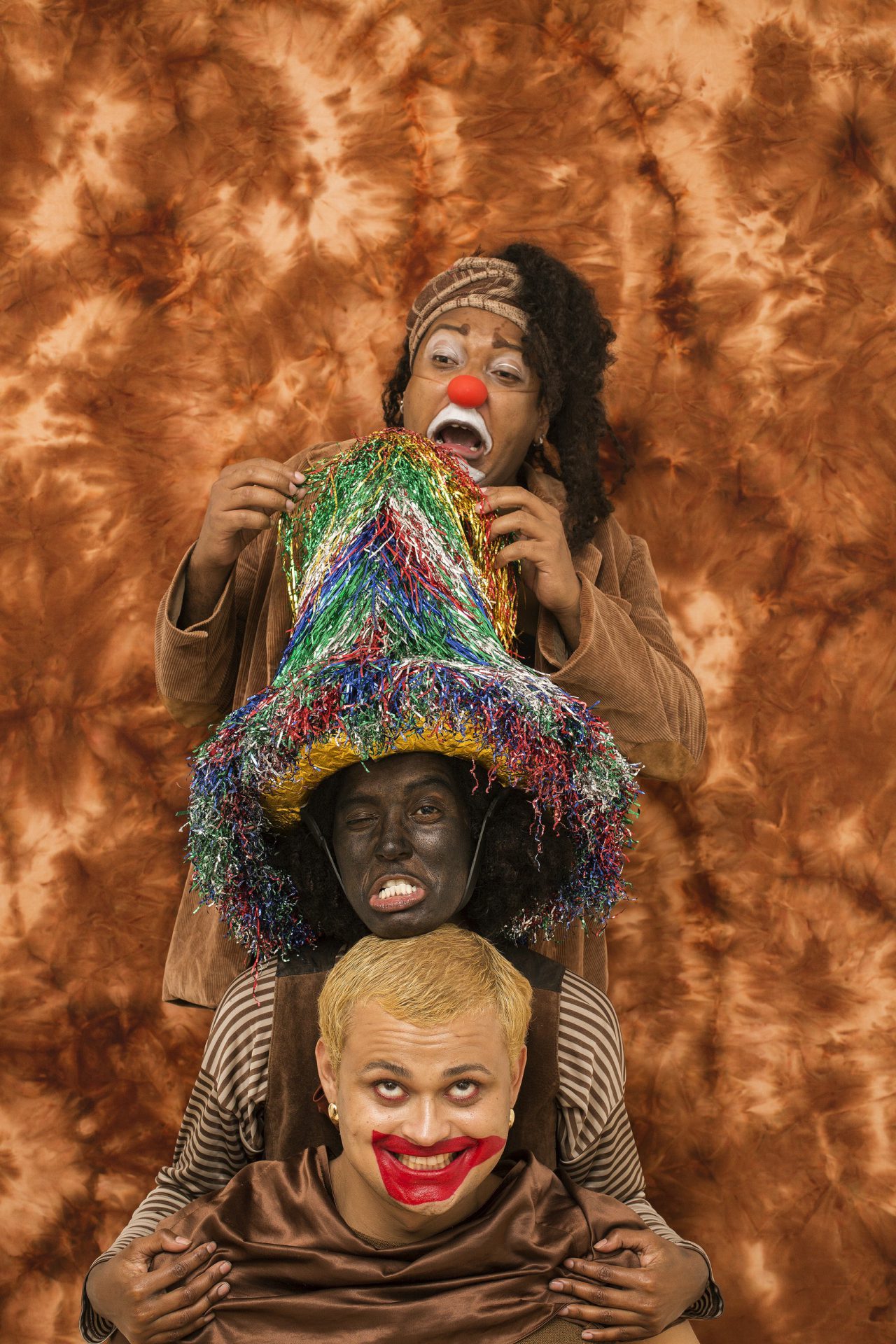
Organização:

Coordenação geral: Raylander Mártis dos Anjos e Fiapo Marrom.
Apoio e assessoria de imprensa: Pivô Arte e Pesquisa.
Design: André Victor.
Registro fotográfico: Linga de Acácio.
0
    0
    Carrinho de Compras
    Seu Carrinho está vazioVoltar à Loja